
Press Releases
Balint Leads CPC Task Force Hearing on Taxing Corporate Greed, Calls for Fairer Tax Code
Washington,
April 24, 2026
Tags:
Democracy
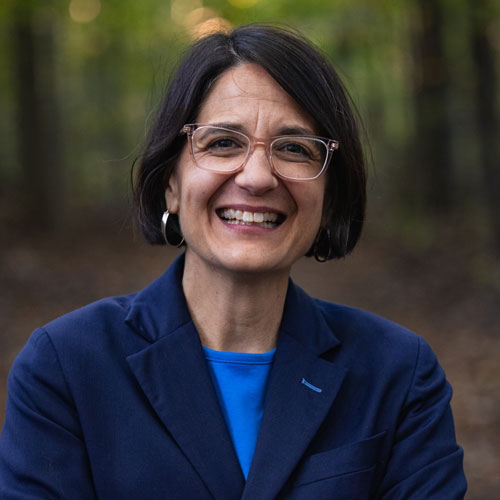
WASHINGTON, D.C. — Congresswoman Becca Balint (VT-AL), Chair of the Congressional Progressive Caucus (CPC) Ending Corporate Greed Task Force, convened a shadow hearing this week on “Visions of an Affordable Life: Taxing Corporate Greed,” bringing together lawmakers and policy experts to examine how the current tax code fuels corporate profiteering and deepening inequality, and to outline potential solutions to ensure the ultra-wealthy pay their fair share. At the hearing, Members and witnesses underscored how rising costs for working families are being driven by a tax system that rewards corporations and billionaires while leaving everyday Americans behind. “As a former history teacher, I often mention that we are in a second Gilded Age. And we have a responsibility to do things differently because it doesn't end well. The tax code is at the center of this problem,” said Rep. Balint. “If we're serious about making life more affordable and more manageable, which I am and which everyone here today is, then we have to make sure that taxes are a way to even the playing field for Americans.” “I think it is on us as Democrats, on our side of the aisle, to say no we understand this has been a long time in coming. This is a problem that we have not tended to enough and that's how we got here,” Balint continued. “It doesn't make any sense for us to get the gavels back if we don't use that power to make this a more fair and equitable economy...you shouldn’t have to be super wealthy and well-connected to have a good life in this country."
Rep. Jim McGovern (MA-02), Co-Chair of the Task Force, emphasized the role of corporate influence in shaping tax policy. “My Republican colleagues hear what we hear when we do town halls, yet we see these policies move forward that totally ignore what [the witnesses] just talked about today,” said Rep. McGovern. “My view is that is it not that they are ignorant about what the realities are, it is that they’re bought and they’re owned by corporate special interests. It’s the money in politics.” Rep. Maxine Dexter (OR-03), Co-Chair, highlighted how the current tax code reflects misplaced priorities. “A tax code is a statement of our values, and our values are completely upside down right now,” said Rep. Dexter. “It needs to create a stable foundation for families and communities to have what they need. Instead, our current system has rewarded the wealthiest Americans and corporations, short-changes workers, as we've heard, and concentrated wealth and power at the top.” Witnesses provided data and firsthand perspectives on the consequences of an inequitable tax system. “Americans are deeply frustrated with the tax code, not because taxes exist, but because the system feels rigged. They see corporations posting record profits while paying effective rates well below what a teacher or a nurse pays. They see billionaires treating the tax code like a game that they always win while their own costs for housing, healthcare, and childcare keep climbing,” said Elizabeth Wilkins, President and CEO of the Roosevelt Institute. “That sense of unfairness is corrosive. It doesn't just make people angry about taxes, it erodes their belief in their government and that their government works for them at all.” Kristen Crowell, Executive Director of Families Over Billionaires, spoke to the lived experiences of working families. “The decisions that are made here in Washington, D.C. don’t stay here in Washington. They land on our kitchen tables, in community health clinics, and in the lives of ordinary people all across the country,” said Crowell. “This is not Democrats and Republicans from a voter perspective. That is over. It is class warfare. And that's what it feels like to families. They feel under attack.” Zorka Milin, Policy Director at the FACT Coalition, outlined how corporations exploit loopholes. “We analyzed this treasure trove of fresh tax data and found that 40 major American corporations reduced their tax bills by more than $11 billion through tax havens last year alone,” said Milin. “These findings confirm that our tax code fails to stop big corporations from moving their profits offshore at enormous costs to our federal revenues and domestic jobs. This isn't America first. It's corporations first, Americans last.” Corey Husak, Director of Tax Policy at the Center for American Progress, pointed to structural inequities in the tax system. “Voters say the rich aren't paying their fair share, and they're right,” said Husak. “Wall Street investors already have access to low capital gains rates. Why do they need exemptions from even paying that? Many pass-through business owners, like the president, are billionaires. Why do they need a pass-through deduction giving them lower marginal tax rates than their own workers?” Elizabeth Watson, Director of Federal Government Affairs at AFSCME, emphasized the broader impact of inequality. “Wealth inequality in America just reached a 30-year high. Today, one-third of wealth in the US is held by 1% of Americans,” said Watson. “These rich Americans have a powerful lobby in Congress fighting to rig the tax code in their favor. They're fighting to make it nearly impossible for working people to collectively bargain for their fair share.” Together, members and witnesses made clear that fixing the tax code is central to lowering costs, restoring fairness, and rebuilding trust in government. Background The CPC Ending Corporate Greed Task Force is focused on developing and advancing policies to hold corporations and billionaires accountable, including efforts on tax fairness, antitrust enforcement, price gouging, money in politics, and financial regulation. The full livestream of the hearing can be viewed here.
### |